
Trigger interventions from real-time physiological data
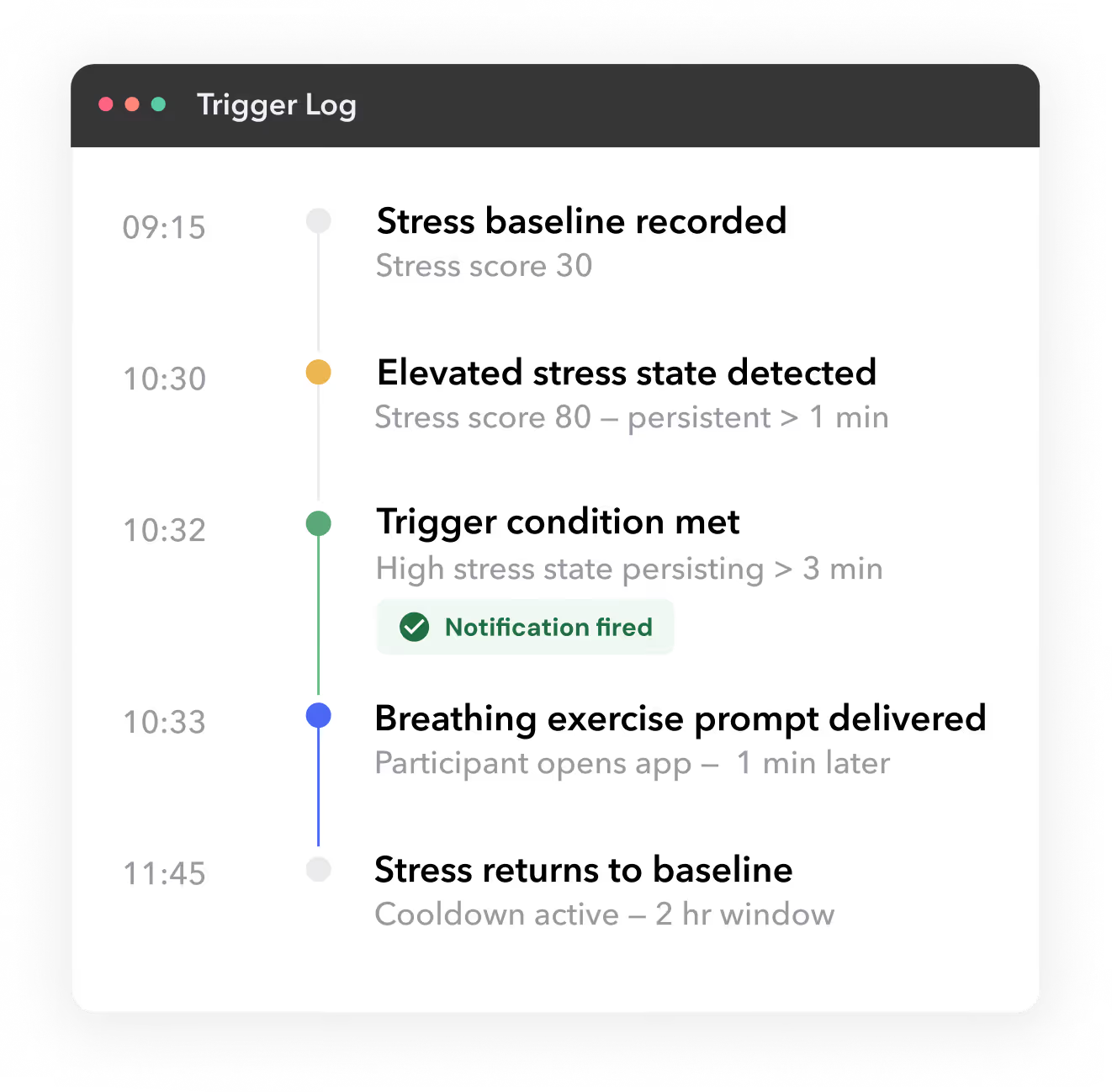
Labfront just-in-time adaptive interventions (JITAI) fire automatically when a participant crosses a defined threshold. Sleep quality drops. Stress spikes. Activity falls short. The right response fires immediately. No manual monitoring, no lag.
.svg)
True background streaming
Unlike other platforms, Labfront maintains a continuous Bluetooth connection to Garmin devices, streaming raw BBI and accelerometry while the app runs in the background.
Offline-first trigger engine
Trigger logic runs locally on the participant's phone. Conditions are evaluated and tasks fire without an internet connection, critical for field and clinical environments.
Custom scoping with your research team
No two JITAI studies use the same trigger logic. Every Labfront JITAI configuration is built directly with your team.
Reach participants at exactly the right moment
See what JITAI makes possible across real research scenarios.

When a participant's stress level crosses your defined threshold, a prompt fires immediately. Trigger a mindfulness prompt, a breathing exercise, or a brief EMA at the moment of acute stress.

Craving and relapse risk track with physiological arousal, sleep deficits, and activity patterns. JITAI lets your protocol respond to those signals rather than a fixed schedule.
.svg)
Deliver a rest prompt when exertion exceeds a safe range, or an encouragement message when activity falls below a daily target. JITAI closes the loop between real-world physiology and protocol response.

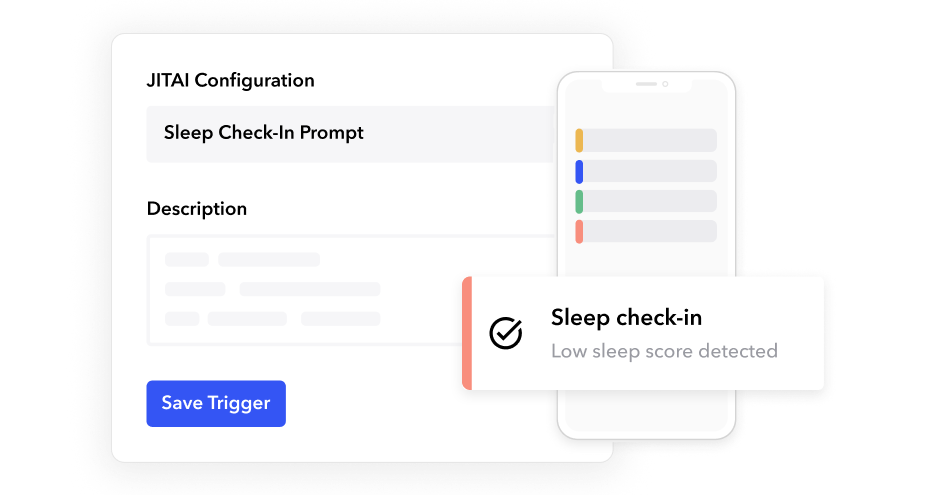
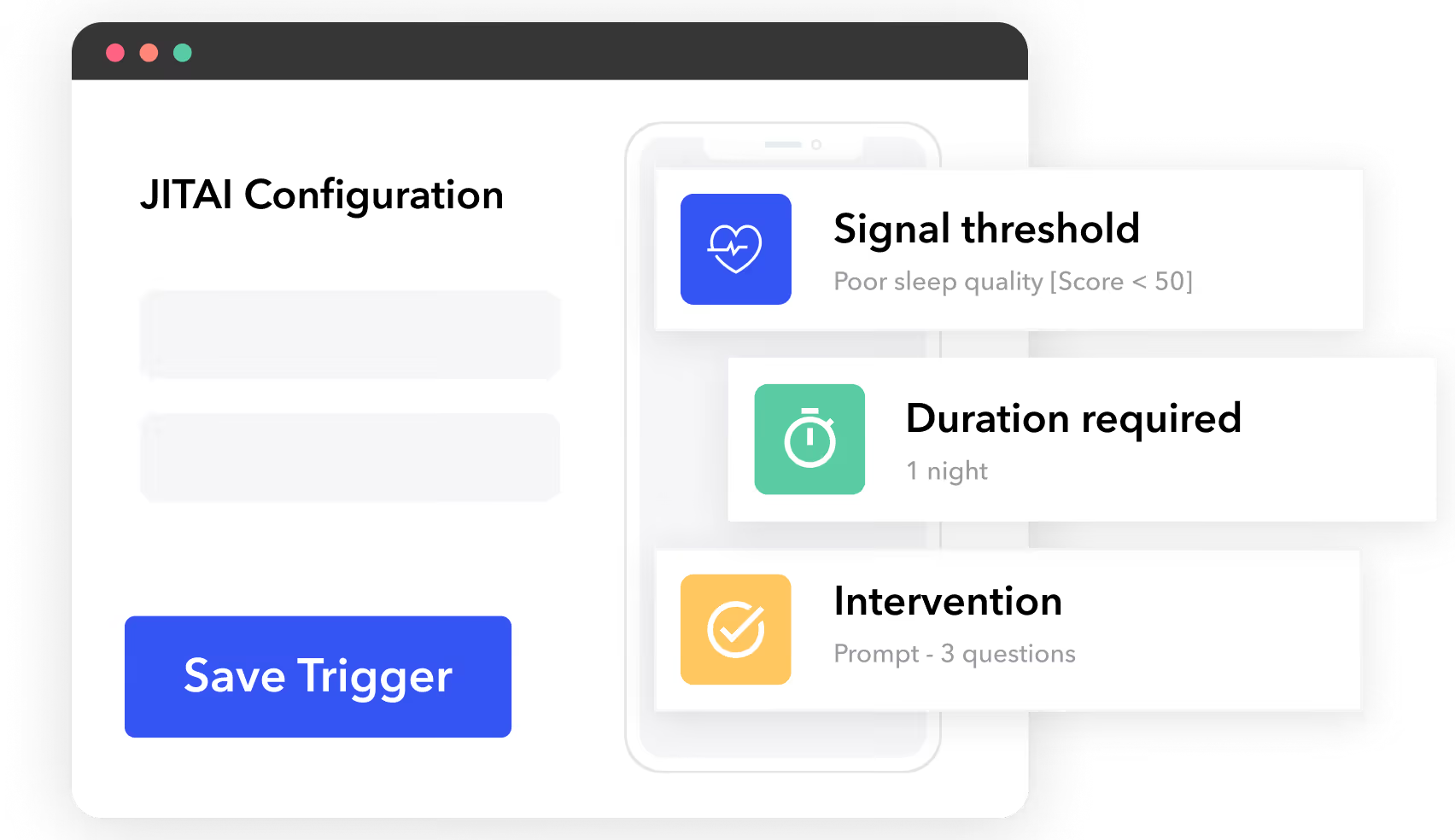
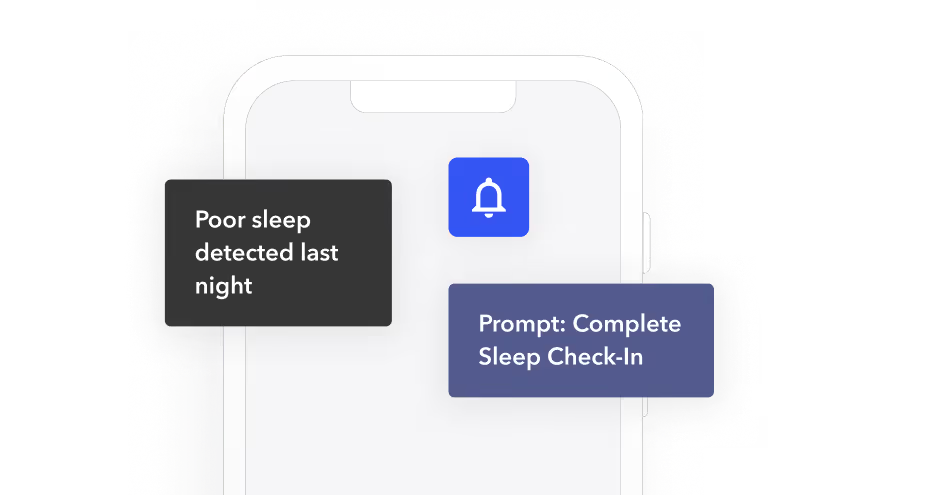
Trigger prompts tied to the previous night's sleep metrics. If a participant's sleep drops below your threshold, a targeted prompt surfaces the following morning. Real-world variability becomes a study input rather than noise to control for.
JITAI is customized around your protocol
Intervention type, delivery timing, cooldown period, and escalation rules all vary by research question. That's why every configuration is scoped with your team. You define the logic. Labfront handles the rest.
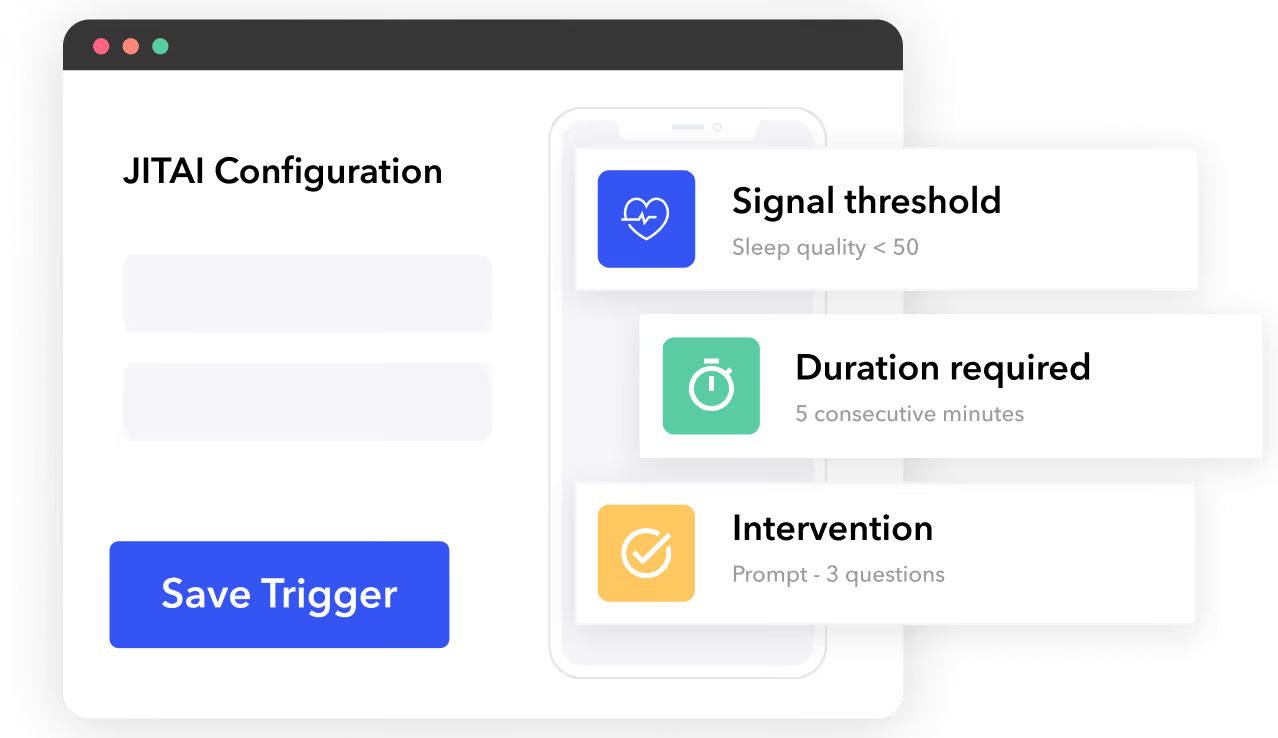
Choose the physiological signal, set the threshold, and define the direction of change that fires the intervention. Use a single signal or combine several.
Define exactly what participants receive when a trigger fires. Format, content, and tone are yours to specify.
Control when and how often the system can intervene. Protect participants from over-triggering and build in logic for non-response.
Set per-participant thresholds, e.g. individualized HR zones, while running the same trigger logic across your entire cohort.
Define. Collect. Intervene.
Define trigger conditions
Work with the Labfront team to specify the physiological threshold or behavioral signal that indicates your target state: stress score, heart rate, step count, sleep quality, or a combination. Set duration requirements and cooldown periods to control intervention frequency per participant.
.svg)
Enroll participants and collect data
Distribute a unique invite code to each participant. Once connected, their device begins capturing continuous physiological data.


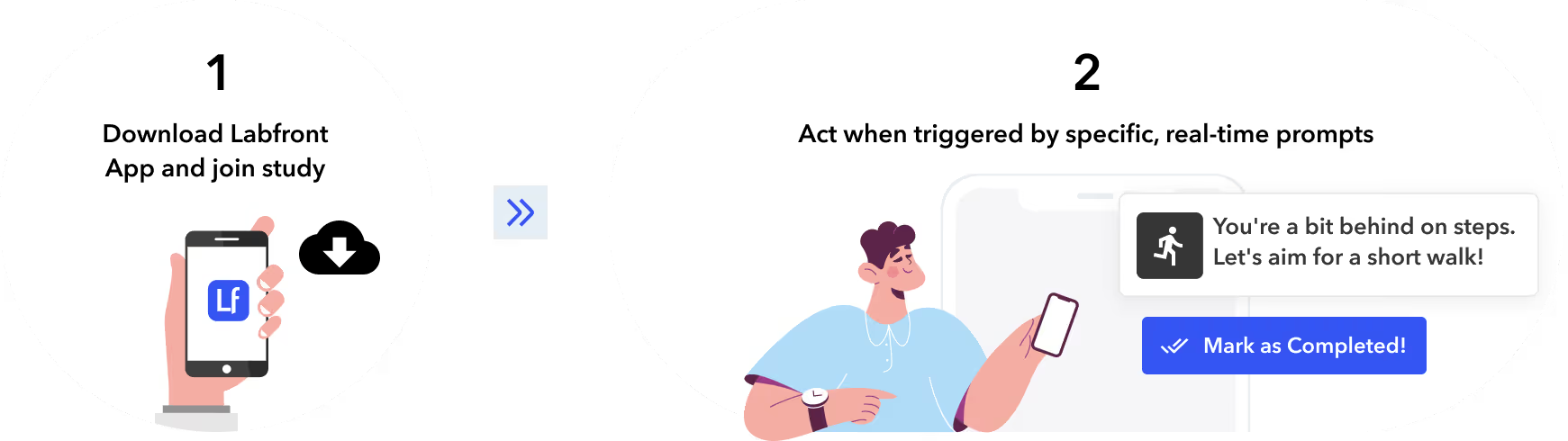

Deliver the intervention
When a condition is met, the right task or notification fires instantly. A survey prompt, push notification, or custom message. Different triggers can route to different interventions. You control what participants receive and when they're eligible again.
We help you get JITAI written into your grant
Grant reviewers want specifics: how triggers fire, how thresholds are calibrated, and how your team will validate accuracy. A vague methodology section doesn't survive review at NIH, NSF, or CIHR.
We work with your team before your submission deadline to scope the implementation and give you the technical language reviewers expect.
.svg)
NIDA, NIDDK, and NIMH are the top three NIH institutes funding JITAI research, with over $45M awarded to mental health studies alone.

Protocol design
We help define trigger logic, EMA timing, and intervention types that align with your research hypotheses and IRB requirements. We also confirm which Labfront-compatible devices and biomarkers fit your design so you don't commit to hardware in your application that can't support your trigger signal.

Grant language & technical narrative
We write a description of Labfront's JITAI capabilities for your data collection plan or technology section, covering streaming architecture, trigger logic, offline capabilities, and the full data flow from wearable signal to intervention delivery. The language is written for grant reviewers, not engineers.

Letters of support & pilot data
We partner with research teams on feasibility pilots and provide formal letters of support that strengthen your application's technical credibility.